We Help You To Renovate Your Blogger Blog With Awesomeness!

Thursday, 7 December 2017

  • This Android App Leaked The Personal Data Of 31 Million Users

    This Android App Leaked The Personal Data Of 31 Million Users


    If we look around, the threat of malware and viruses becoming more and more dangerous every day. As recently, a well-known application for Android has leaked the personal data of more than 31 million users, and not only that even this application is also available for iOS as well.

    This Android App Leaked The Personal Data Of 31 Million Users

    If we look around, the threat of malware and viruses becoming more and more dangerous every day. In such cases, proper Antivurs solutions become our best friend. However, just imagine, what if the protector of your digital friend can’t be trusted?
    As the well-known Russian Antivirus, Kaspersky CEO Eugene Kaspersky said that he would leave Russia if the government asked Kaspersky to spy on users. Eugene made the statement during a news conference in the United Kingdom after a media avalanche initiated by the FBI (Federal Bureau Of Investigation).
    Again the mobile operating system is par excellence news. We had not talked about a security problem for a long time. Many applications available for Android devices do not have adequate security. Users of a keyboard developed by the company AI.Type has been affected by a security failure in the company’s databases.
    Why did this happen, if it’s just a keyboard? The problem is that it had some function more than serving as software entry into the mobile operating system of Mountain View, Android. To be more exact, the keyboard has served as a keylogger, allowing the collection of the information entered in each device and its subsequent sending to the MongoDB databases, not highlighting its good security configuration.

    577 GB compiled by this keyboard for Android

    We have talked about a number of devices over 30 million. However, in what size database does it alter to? The security experts of the Kromtech company have estimated that the figure would be higher than the 577 GB of information contained in the MongoDB database exposed. They indicate that at least six million entries in this database have the name and surname of the person, the contact telephone number and the email address.
    From the commercial point of view, this has a great outlet in the black market, about this time, where spam campaigns are the order of the day. Many users wonder why they receive emails of this type if they do not subscribe or sign up for a suspicious service. Here we have the answer.

    Full access to the device

    On more than one occasion we have indicated that it is fundamental to review the permissions requested by the application that is being installed. Many users do not set and video games, video applications or keyboards for the operating system request too many permissions, which results in unnecessary access to information and hardware equipment.
    The Android keyboard of the AI.Type company claims access to the information that is being entered through the keyboard. The operating system itself warns the user that this aspect could be a problem for security.
    What is really striking is that this software is also available for iOS and with a broad request for permissions in the system. At the moment it is not known if the collection affects only the users of the mobile operating system of Mountain View, of course, here we are indicating Android.
    So, what do you think about this massive data breach? Simply share all your views and thoughts in the comment section below.
  • Wednesday, 6 December 2017

  • Google Just Launched A New Operating System For Smartphones

    Google Just Launched A New Operating System For Smartphones


    The tech giant Google has always sought to lighten its operating system, of course, Android so that it can be used on any hardware, with more or fewer resources, in a fluid and functional way. Hence, now it has created a new version of Android or you can say that it is a light version of Android.

    Google Just Launched A New Operating System For Smartphones

    The tech giant Google has just officially launched Go Edition, the version of Android Oreo aimed at smartphones or mobile phones with limited features. In this way, the developer intends to update and offer support to a universe of terminals that -in general- tend to be adrift in terms of updates.
    Go Edition, Android’s solution to limited-performance smartphones
    Mobile telephony has been characterized, with the emergence of smartphones, to offer alternatives to all consumers under different ranges of models. Thus, we always find a low, a medium and a high range.
    In the upper range, we find the flagship smartphones of the manufacturers, which contain the best technology that year can offer developers. On the average, there are teams that offer a balance in the cost – performance ratio and that often fall within the support plans offered by the companies.
    Finally, there is a low range, aimed primarily at those who look for more than affordable smartphones, without putting the emphasis on technical specifications. The latter end up being left out of the future plans of the manufacturer and are very soon left behind without updates, as far as the software is concerned.
    It is for that reason that Android developers have officially launched Android Oreo Go Edition, a version of the mobile operating system for terminals with basic features or you can say that device with basic specs and limited feature. The aim is, undoubtedly, not to leave these terminals abandoned in obsolete versions of software that can mean, for example, security and performance problems.

    Source: Android.com
    As detailed by several reliable sources, Android Oreo Go Edition is already available as part of the update to Android 8.1 and is specially designed for terminals of 1GB of RAM or less, which are the ones that will receive this version.

    Optimized applications for better performance
    Go Edition was born as a solution to the process of updates and bases its existence on three fundamental pillars: improvements in the performance of smartphones under this distribution and an optimized storage, suitable and optimized apps for this segment and, in addition, a Google Play Store version that will allow the user to download applications designed to work better on Android Go.
    It is important to highlight the importance that the developer is giving this version to the proprietary applications of Google, which have been optimized so that they can work correctly in low-end and mid-range models with limitations.
    For this to work, the developer has emphasized better management of resources that are vital to the performance of the mobile phone: RAM, internal storage and security.
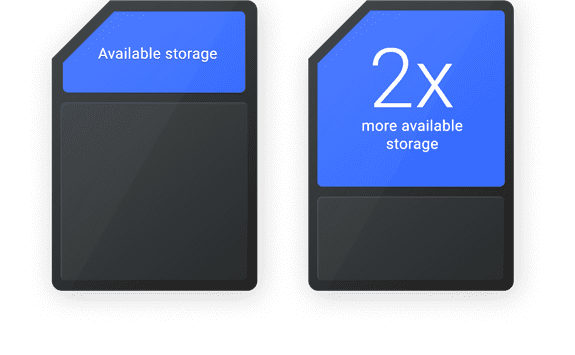
    Therefore, in the new version of the operating system applications can operate 15 percent faster and, in addition, applications that come pre-installed factory occupy half the space than higher terminals.
    So, what do you think about this new version of Android Oreo Go edition? Simply leave us each one of your views and thoughts in the comments section below.
  • Android 8.1 Oreo Rolling Out! Check Out The Supported Devices

    Android 8.1 Oreo Rolling Out! Check Out The Supported Devices


    We all know very well that the tech giant Google is constantly preparing new versions of Android and developing the necessary updates. Android Oreo has just arrived and the tech giant Google now has its new version on the road for testing. Yes, the tech giant Google just launched Android OREO 8.1.

    Android 8.1 Oreo Rolling Out! Check Out The Supported Devices

    It was about a week ago that the tech giant Google made available the second test version of Android 8.1 Oreo. Today, as promised, the tech giant Google has made the final Android 8.1 Oreo and is about to get the new Go Edition version.
    The tech giant Google has officially submitted to Android 8.1 Oreo, the first major update to its mobile operating system. With the arrival of this “stable” version, improvements are introduced and, in addition, some new features that users will love.
    These are the news that comes with Android 8.1 Oreo
    The time for speculation and development versions is over. The Mountain View presented today the first major update of its mobile operating system, which comes with some developments related, among other things, to the optimization of software for smartphones cameras.
    And not only that, it was also announced along with this update optimized distribution for low-end devices, Android Oreo Go Edition, which includes improving the performance of mobile phones with RAM of 1GB or less.
    But with regard to the higher version, Android 8.1 Oreo, the stable version comes with the enabling of the Pixel 2 visual core chip. This chip will allow third-party applications to use the HDR+ of the main camera in apps such as Instagram, WhatsApp or Facebook.
    In addition, the notification bar has been redesigned, the location of gestures has been changed, an API (Application Programming Interface) has been introduced to manage neural networks in the system and improvements in security to the system.
    Other notable improvements that we find in this update are the bug fixes, the change in the hamburger emoji, software additions such as the battery level of connected Bluetooth devices, space reduction of inactive applications and performance improvements of the batteries.

    Password autocompletion is also improved; stability in the fingerprint reader support is improved; Sound failures reported in equipment such as the Pixel 2 XL and the Nexus 5X are remedied.
    However, let’s know in brief what’s new in Android 8.1 Oreo. After the beta versions made available, Google has now made available the Android 8.1 Oreo that is already available for smartphones of the range Pixel and Nexus.
    The novelties are not exactly many, but it is necessary to emphasize:-
    • The integration of the “Neural Network API” (NNAPI), directed to new applications and services that make use of machine learning;
    • Improvements were also implemented in the system self-completion framework;
    • The new Pixel 2 smartphones also support the Visual PixelCore – To improve image processing and machine learning support. For example, with support for Pixel Visual Core, you can 
      process HDR+ images faster (up to 5x) and 1/10 of power consumption;
    • Browsers will have more security mechanisms;
    • It will be possible to see the battery level of devices that are connected via Bluetooth and that are connected to the smartphone;
    • Sound problems verified on Nexus 5X, Pixel 2 and Pixel 2 XL have been fixed;
    • Significant security improvements through fingerprint reading
    • Fixes of hamburger emojis and beer.
    Moreover, the first devices that will receive the update will be the tech giant Google’s flagship terminals. That is: the Google Pixel 2 and Pixel 2 XL, Pixel and Pixel XL of first generation, the Nexus 5X and Nexus 6P, Pixel C. These smartphones will begin in these hours to receive the new version, while there is no detail yet on when the rest of the manufacturers will deploy Android 8.1 Oreo on their smartphones.
    So, what do you think about this? Simply share your views and thoughts in the comment section below.
  • Xiaomi Shows Off Redmi 5, Redmi 5 Plus: Specifications & Launch Date

    Xiaomi Shows Off Redmi 5, Redmi 5 Plus: Specifications & Launch Date


    Although the Chinese smartphone manufacturer Xiaomi bets on a wide range of smartphones all well positioned at the quality/price level, it is in the Redmi line in which company achieved great sales successes. Hence, now Xiaomi has decided to launch two new budget smartphones, Redmi 5 and Redmi 5 Plus.

    Xiaomi Shows Off Redmi 5, Redmi 5 Plus: Specifications & Launch Date

    For a few weeks, we have not stopped talking about the Xiaomi Redmi 5 and its different variants. Nothing is clear about the devices that will be launched, and leaks do not leave us much information about what model we are seeing. Today we have a new image that we believe is the Xiaomi Redmi 5 Plus. According to the rumours, there will also be a Redmi 5 and a Redmi Note 5.
    We have been knowing for some time that the Chinese smartphone manufacturer Xiaomi is preparing a device with hardly any bevels and with an 18:9 panel for the mid-range. Everything points to this mobile is the Redmi 5 Plus, which must be presented in just a few days.
    Before the end of the year, Xiaomi is still preparing to present some new features in its portfolio of smartphones. The Redmi 5 and Redmi 5 Plus are set to be presented this week, however, its appearance is already known.
    The well-known Chinese smartphone manufacturer Xiaomi is now one of the most well-known Chinese brands, responsible for a wide portfolio of products. Smartphones are perhaps the best known and most prominent products of this brand.
    Within smartphones, the well-known Chinese smartphone manufacturer Xiaomi has two different ranges, which also aim to reach different audiences. The Mi range attacks a higher segment, while Redmi is responsible for the cheapest and best value for money smartphones.
    One of the biggest sales slices of the brand is even in this last range, where models like Redmi 4 and Redmi Note 4 Pro have claimed a huge success. Hence, the well-known Chinese smartphone manufacturer Xiaomi is already preparing the succession of these models and will present this week the Redmi 5 and the Redmi 5 Plus.
    Xiaomi Redmi 5 and Redmi 5 Plus – Best Quality at a low price
    The Redmi range is one of the most important in the Xiaomi portfolio, as it represents a large share of sales globally. Year after year, several successes have been in this range, for example, Redmi Note 3 and 4 and Redmi 4.
    While there is no news about the launch of the new Redmi Note 5, however, the well-known Chinese smartphone manufacturer Xiaomi is already preparing the launch of the cheaper models, the Redmi 5 and Redmi 5 Plus. These new models will arrive already on December 7, but Donovan Sung has already exhibited the look of these new models.
    Is everyone ready for the all-new Redmi 5 and Redmi 5 Plus? We're launching these two new devices in China on Thursday Dec 7. Giving everyone a sneak preview! ๐Ÿ˜Ž 

    Still little is known about this model, however, it is already possible to verify that Xiaomi will adopt an 18:9 screen in its new models. The Chinese manufacturer thus inserts the new fashion of screens in its more economic models.
    Without information about the price or features, looking at the history of these models, it is possible to predict that the values should not be too high since the Redmi 4 is currently on sale for values that are around $120.
    However, for now, we have to wait for December 7 to know more about these models, to know their characteristics and, above all, to know if the well-known Chinese smartphone manufacturer Xiaomi will keep the policy of low prices for this range or not.

    So, what do you think about this? Simply share your views and thoughts in the comments section below.
  • Nokia 9 & Nokia 8 ‘2018’ Edition Coming Soon!

    Nokia 9 & Nokia 8 ‘2018’ Edition Coming Soon!


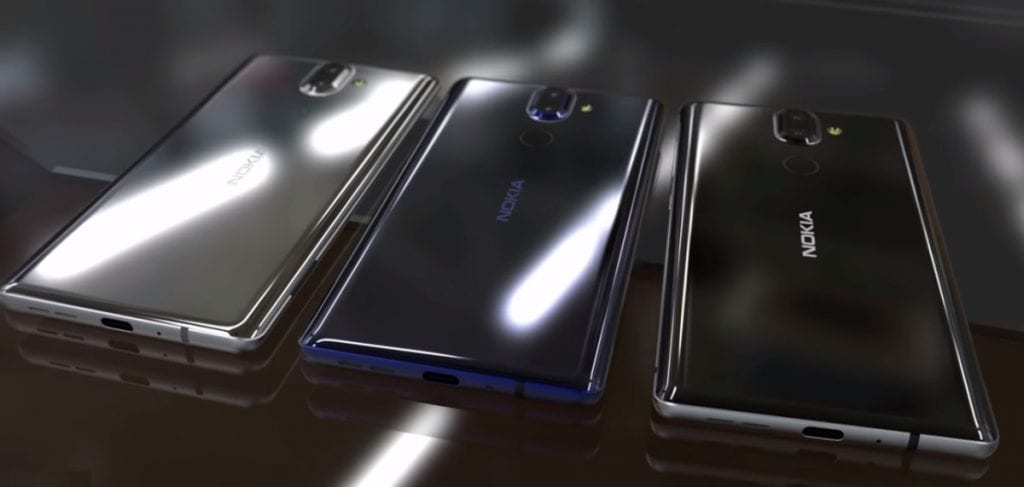
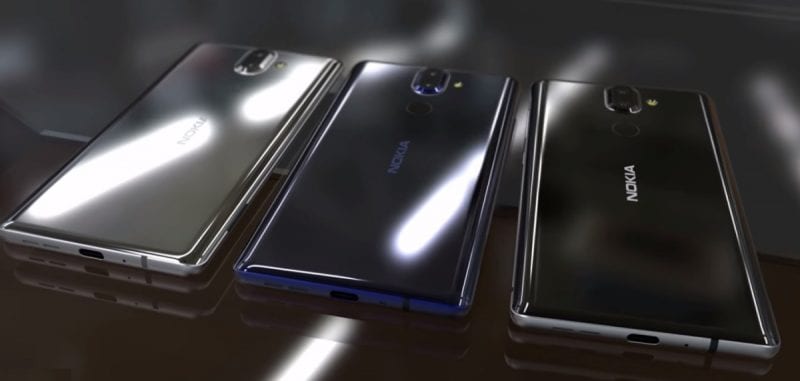
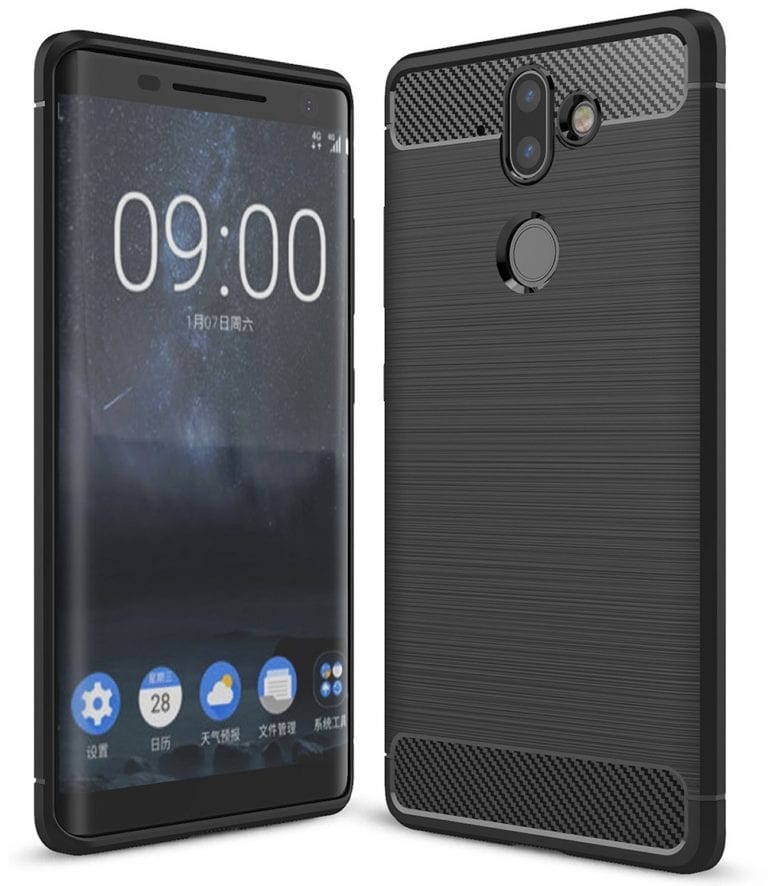
    The design of the alleged Nokia 9 smartphone from HMD Global was leaked recently and it shows that the smartphone will feature an AMOLED display and a curved glass at the back. The image also shows a dual rear camera setup and the fingerprint sensor was placed just below the back camera. Moreover, along with the new Nokia 9, the Finnish company Nokia will also launch a new version of Nokia 8.

    Nokia 9 & Nokia 8 ‘2018’ Edition Coming Soon!

    We all know that Nokia recently made a major comeback in the smartphone market and it looks like Nokia is doing things really well.
    The manufacturer has resurfaced as a phoenix with the help of HMD Global and had now entered the Android market. The next smartphone that could be expected from the HMD global is Nokia 9 and it’s going to be the first high-end smartphone from the Finnish company Nokia that can compete against the all new Samsung Galaxy S8, Note 8 and iPhone X.
    The design of the alleged Nokia 9 smartphone from HMD Global was leaked recently and it shows that the smartphone will feature an AMOLED display and a curved glass at the back.
    Although a few weeks ago they began to filter the possible characteristics of the Nokia 9, today we tell you when we can wait for this device and, in addition, who will be accompanied.
    We say this because, as far as we know, the Finnish company Nokia has big projects for 2018, and is expected to start the year by presenting its new flagship, the Nokia 9, along with a renewed version of the Nokia 8.
    However, we already knew that the Nokia 9 was a terminal that was going to come to light some day, it was a matter of time, but what many of us has not expected is the arrival of the revitalized version of Nokia 8, in its version 2018.
    Nokia 9 and Nokia 8 (2018) will arrive next month


    Nokia 9 & Nokia 8 ‘2018’ Edition Coming Soon!


    Nokia 9 & Nokia 8 ‘2018’ Edition Coming Soon!

    The design of the alleged Nokia 9 smartphone from HMD Global was leaked recently and it shows that the smartphone will feature an AMOLED display and a curved glass at the back. The image also shows a dual rear camera setup and the fingerprint sensor was placed just below the back camera. Moreover, along with the new Nokia 9, the Finnish company Nokia will also launch a new version of Nokia 8.

    Nokia 9 & Nokia 8 ‘2018’ Edition Coming Soon!

    We all know that Nokia recently made a major comeback in the smartphone market and it looks like Nokia is doing things really well.
    The manufacturer has resurfaced as a phoenix with the help of HMD Global and had now entered the Android market. The next smartphone that could be expected from the HMD global is Nokia 9 and it’s going to be the first high-end smartphone from the Finnish company Nokia that can compete against the all new Samsung Galaxy S8, Note 8 and iPhone X.
    The design of the alleged Nokia 9 smartphone from HMD Global was leaked recently and it shows that the smartphone will feature an AMOLED display and a curved glass at the back.
    Although a few weeks ago they began to filter the possible characteristics of the Nokia 9, today we tell you when we can wait for this device and, in addition, who will be accompanied.
    We say this because, as far as we know, the Finnish company Nokia has big projects for 2018, and is expected to start the year by presenting its new flagship, the Nokia 9, along with a renewed version of the Nokia 8.
    However, we already knew that the Nokia 9 was a terminal that was going to come to light some day, it was a matter of time, but what many of us has not expected is the arrival of the revitalized version of Nokia 8, in its version 2018.
    Nokia 9 and Nokia 8 (2018) will arrive next month
    Source: Nokia Power User
    Source: Nokia Power User
    Something more than a year ago when the Finnish company Nokia, thanks to HMD Global, returned to the Android terrain, offering a shipment of smartphones ranging from the low range to the high, through devices like the Nokia 6 that was halfway.
    But now, the Finnish company Nokia wants to start competing with the heavyweights of the sector, and perhaps the future Nokia 9 is that great high range that we all expect to see from a company of this caliber.
    And we say maybe since we already said the same with the Nokia 8, and in the end, it was one of those phones that went through the market without pain or glory, the Finnish company Nokia did not know how to face the challenge well at that time.

    But the Nokia 9 seems to be a reality, and if we stick to its possible characteristics, everything looks very good. It will have the Snapdragon 835 SoC, supported by 6 GB or 8 GB of RAM.
    But even more interesting will be its multimedia section, since everything indicates that it will have a full-screen design and a double camera that will delight lovers of photography.
    As for the Nokia 8 2018, little is known yet, but it is rumored that it will come with the same specifications of the Nokia 9, and a revitalized version of Nokia 8 that we already know.

    So, what do you think about this? Simply share your views and thoughts in the comment section below.
  • Tuesday, 5 December 2017

  • Google’s Artificial Intelligence Builds Its Own AI ‘Child’

    Google’s Artificial Intelligence Builds Its Own AI ‘Child’


    It seems that the beginning of an era in which artificial intelligence (AI) systems can build other systems of artificial intelligence has arrived. As recently, the tech giant Google’s Artificial Intelligence (AI) has built its own AI (Artificial Intelligence) child.

    Google’s Artificial Intelligence Builds Its Own AI ‘Child’

    The day has come when machines make other machines. To be more concrete, it is the beginning of an era in which artificial intelligence systems can build other systems of artificial intelligence. An advance that has made the tech giant Google’s AutoML project a reality by designing a computer vision system that far exceeds the most cutting-edge models.
    It was in May of this same year when the tech giant Google’s Brain researchers announced the creation of this initiative, an automatic learning algorithm that learns to build other machine learning algorithms. The intention was to see what an artificial intelligence was capable of, creating another artificial intelligence without human intervention, with the ultimate aim of achieving greater deployment of these technologies.
    There are few humans capable of developing them, they are highly coveted and similar projects would help bring artificial intelligence to many other fields and companies, much more quickly. Otherwise, more slowness would imply a great risk for the AI itself, according to experts like Dave Heiner, the tech giant Microsoft’s advisor. Part of its success implies that the implementation is broad.
    The biggest challenge for AutoML: Create an AI
    The tech giant Google CEO, Sundar Pichai, boasted about AutoML during the presentation of Pixel 2 and Pixel 2 XL and today could again boast to show what has achieved this promising initiative.
    By automating the design of machine learning models using an approach called reinforcement learning, as they explain in Futurism, the researchers made this artificial intelligence act as a neural network of controllers that, in turn, creates another network of artificial minor intelligence. However, a creation, called NASNet, that has surpassed all its counterparts built by humans.
    Its function is to recognize objects in videos broadcast in real time. It must identify people, cars, bags, backpacks and other elements present in the images. AutoML evaluates the performance and, with these data, independently perfects this artificial intelligence by repeating the process thousands of times. An expensive task, usually done by humans, but essential.
    The tech giant Google’s researchers compared the results of the NASNet IDs with “two of the most respected large-scale academic data sets in computer vision,” the ImageNet image classification and the COCO object detection data set, and discovered, they revealed, that surpassed all other computer vision systems made by people.
    Specifically, it was 82.7% accurate in the prediction of the ImageNet validation set, which means it is being above by 1.2% of any previously published result. In the same way, the system is also 4% more efficient with an average precision of 43.1%. In addition, a less demanding version from the point of view of computational resources exceeded by 3.1% the best models of a similar size intended for mobile platforms.
    The advances that AutoML can bring
    As we said at the beginning, part of the success of artificial intelligence will be found in its broad and rapid implementation. The more everyday areas have found solutions through these technologies and more companies can make use of them or create them without too much difficulty, the greater the progress and the greater the advantages. A situation that will further boost research, increasing that progress and those advantages.
    Therefore, an artificial intelligence such as AutoML will be able to open the door for all that progress to arrive in a faster way. It would allow companies without the proper staff and knowledge to have a technology that will advance their business. Although if no action is taken, automation can mean that between 400 and 800 million workers will be left without their jobs by 2030.
    So, what do you think about this? Simply share your views and thoughts in the comment section below.
  • Google Chrome For Android Is About To Get This New Feature

    Google Chrome For Android Is About To Get This New Feature


    We all know very well that the tech giant Google has a habit of trying to meet the application needs of its Android ecosystem. Hence, the tech giant Google just added an extraordinary new feature to its web browser application, Google Chrome for all its Android users.

    Google Chrome For Android Is About To Get This New Feature

    The screens of the best current phones have the ability to play content in HDR. The best in this regard are the Galaxy S8 and the Galaxy Note 8, with a reproduction of 113% of DCI-P3 and 142% of sRGB, in addition to other mobile capable of playing it as the LG G6, LG V30 or Google Pixel. Now, the support for this type of content will be integrated into the tech giant Google’s popular web browser, of course, Google Chrome browser itself.
    Android already supports HDR from 7.0 Nougat, and now it’s up to Chrome
    For a few months, the giant video platform, YouTube has been updated to accept the playback of HDR content, although limited to 1080p inexplicably for a month. Thanks to the HDR, the depth of colour is increased from 8 to 10 bits, passing the content from having 16.7 million colours to 1,000 million colours. In addition, it has a better brightness and can show a more reliable image thanks to more homogeneous images, with brighter blacks and softer whites.
    The HDR is here to stay and is triumphing over all these improvements, where other technologies such as 3D failed. In addition to televisions, mobile is supported from Android 7.0 Nougat, and iPhone X is the first iPhone capable of displaying HDR content thanks to the Samsung screens which were used in iPhone X models.

                                        Source: Indian Express

    Google Chrome For Android Is About To Get This New Feature

    Google Chrome For Android Is About To Get This New Feature

    Google Chrome For Android Is About To Get This New Feature

    We all know very well that the tech giant Google has a habit of trying to meet the application needs of its Android ecosystem. Hence, the tech giant Google just added an extraordinary new feature to its web browser application, Google Chrome for all its Android users.

    Google Chrome For Android Is About To Get This New Feature

    The screens of the best current phones have the ability to play content in HDR. The best in this regard are the Galaxy S8 and the Galaxy Note 8, with a reproduction of 113% of DCI-P3 and 142% of sRGB, in addition to other mobile capable of playing it as the LG G6, LG V30 or Google Pixel. Now, the support for this type of content will be integrated into the tech giant Google’s popular web browser, of course, Google Chrome browser itself.
    Android already supports HDR from 7.0 Nougat, and now it’s up to Chrome
    For a few months, the giant video platform, YouTube has been updated to accept the playback of HDR content, although limited to 1080p inexplicably for a month. Thanks to the HDR, the depth of colour is increased from 8 to 10 bits, passing the content from having 16.7 million colours to 1,000 million colours. In addition, it has a better brightness and can show a more reliable image thanks to more homogeneous images, with brighter blacks and softer whites.
    The HDR is here to stay and is triumphing over all these improvements, where other technologies such as 3D failed. In addition to televisions, mobile is supported from Android 7.0 Nougat, and iPhone X is the first iPhone capable of displaying HDR content thanks to the Samsung screens which were used in iPhone X models.
    Source: Indian Express
    Source: Indian Express
    Currently, to see this content we can use the YouTube app, Google Play Movies or Netflix. However, as it has been discovered in the Chromium code, Google Chrome will add support for this content, being able to extract the metadata from a video container and pass it through the MediaCodec. The content that it will play will have to be encoded in VP9 Profile 2 (10 bits), which is what YouTube uses for its videos and is widely supported by the tech giant Google instead of the proprietary HEVC standard.
    The HDR is currently taking its first steps, but in the coming years will probably become the standard image of our devices as there will be more televisions, tablets, phones, monitors and screens in general that are compatible with this content. In addition, the content available with this feature has increased in the last year, coming hand in hand with 4K UHD movies.
    The phones are the most important devices on the face of the rapid popularization of this technology along with televisions, as users tend to change more mobile than TV or monitor. Little by little the HDR is making its way onto the television, with models capable of reproducing this content for just 600 dollars.
    So, what do you think about this new HDR feature for Chrome? Simply share your views and thoughts in the comment section below.
  • Copyright @ 2013 Tech News.